The floor under a dining table works harder than almost any other surface in the house. Chairs drag across it several times a day, food and wine land on it, and the whole weight of a stone-topped table sits on four small points. It also sets the tone the table has to live with, because floor and table are the two largest surfaces most people see when they walk into the room.
This guide covers the floor itself: what each material does well under a dining table, how to pair floor tone with table tone, and what underfloor heating changes. Rugs, chair pads and open plan zoning are covered separately in the dining rug and floor protection guide.
What a Dining Room Floor Has to Cope With
Before comparing materials, it helps to be clear about the demands. A dining floor faces four at once, and most of the disappointing choices fail on one of them.
- Repeated chair movementThe same arcs get scraped every day, so surface hardness and finish durability matter more here than in a living room.
- Spills, at short noticeWater, wine, oil and hot dishes all reach the floor eventually. Water resistance decides how relaxed you can be about it.
- Point loadsA large porcelain-topped table concentrates significant weight onto a handful of feet, which softer floors can dent permanently.
- SoundHard surfaces reflect sound. A dining room with tile underfoot, glazing on one side and plaster walls will ring during a dinner party.
The Main Flooring Options Compared
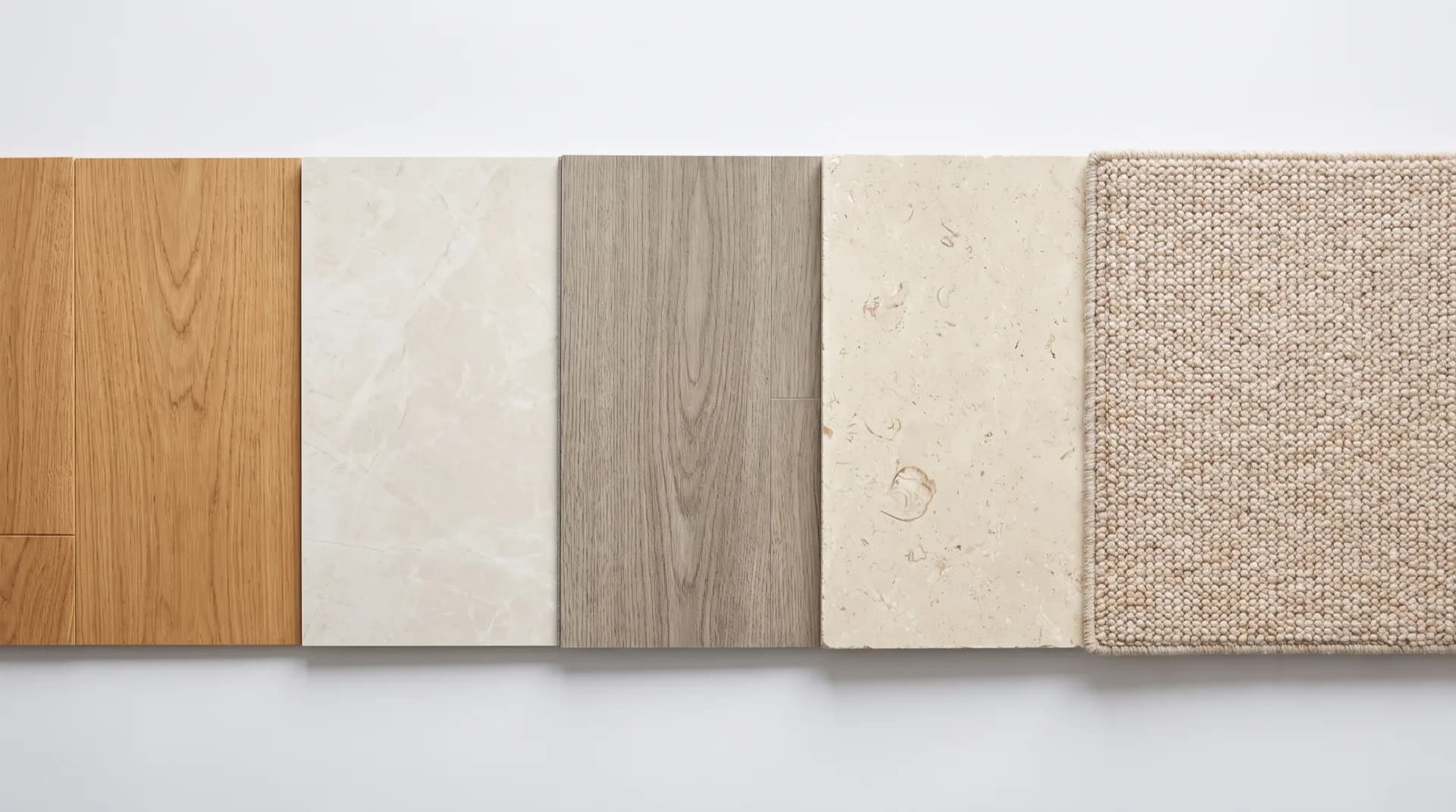
Five materials cover almost every dining room in the UK. Here is how they stack up against the demands above.
| Flooring | Best for | Watch out for |
|---|---|---|
| Engineered wood | Warmth and authenticity in a dedicated dining room | Dents from heavy table feet, and standing spills if left |
| Porcelain tile | Open plan kitchen diners and underfloor heating | Sound reflection, and a cold, hard feel underfoot |
| LVT | Busy family dining with children and pets | Indentation under point loads on thinner, softer boards |
| Natural stone | Architectural rooms where the floor is a feature | Sealing, cost and staining from wine and oil |
| Carpet | Formal, low-traffic dining rooms and acoustics | Chairs snagging, and food that sits in the pile |
Engineered wood
Engineered wood remains the default for dedicated dining rooms, and for good reason. A cross-layered core is far more stable than solid timber against the moisture and temperature swings of a British house, so boards stay flat, and a real wood wear layer gives warmth that no printed surface fully replicates.
The two caveats are denting and water. Oak is hard enough for chairs, softer species less so, and a heavy pedestal table will mark a soft board over time unless the load is spread. Engineered wood is water resistant rather than waterproof, so a spill that sits overnight can lift a seam. Choose a wear layer of 4mm or more if you want the option of sanding it back years later.
Porcelain floor tile
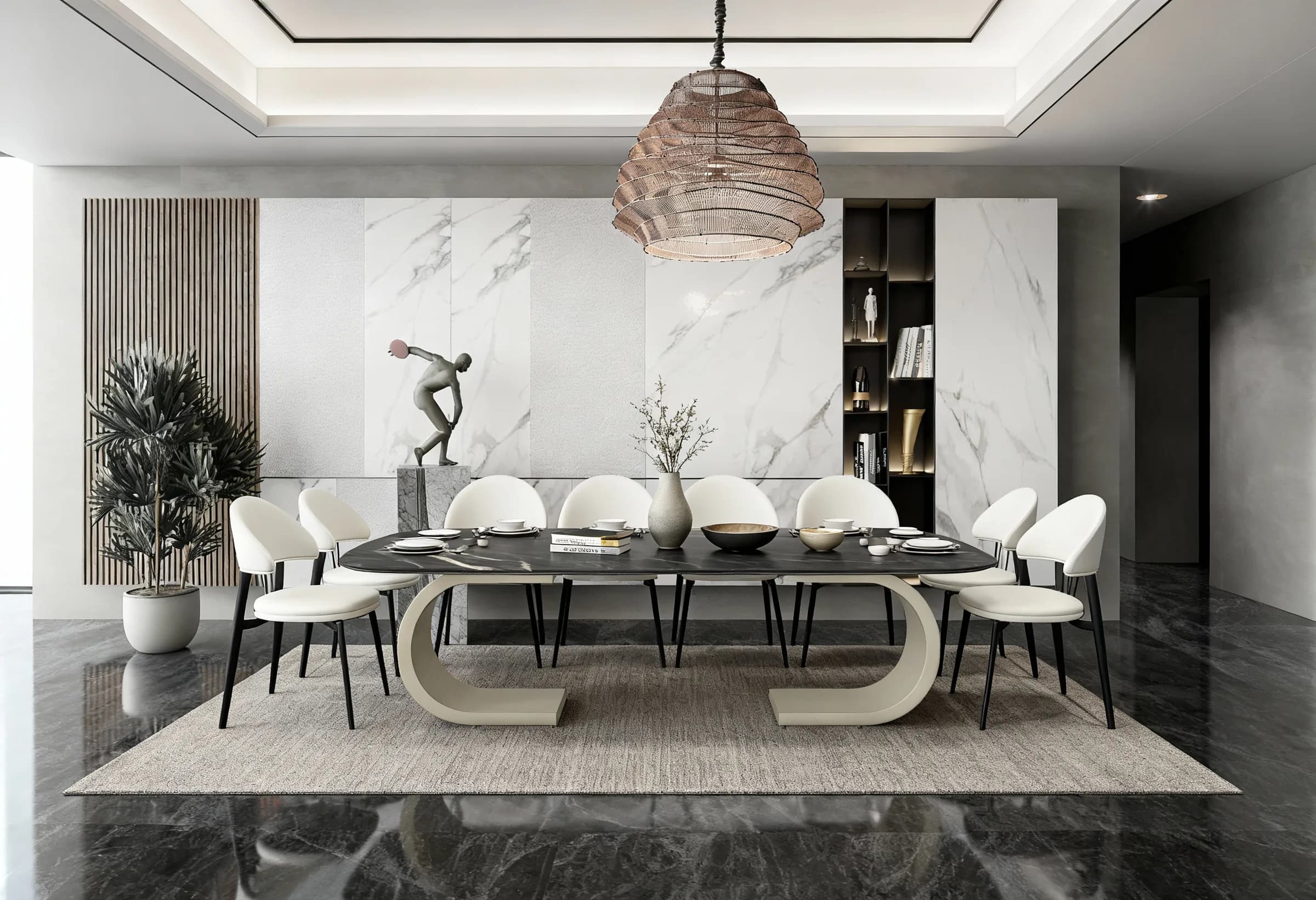
Porcelain is the most durable surface you can put under a dining table. Fired at 1,200°C and above, it absorbs almost no water, resists scratching and staining, and shrugs off anything a dinner service can spill on it. Large-format tiles at 600 x 600mm and 600 x 1,200mm are the current preference, because fewer grout lines read as a calmer, more continuous floor.
It is also the best partner for underfloor heating, since it conducts heat efficiently and is dimensionally stable at temperature. The trade-offs are acoustic and tactile: porcelain reflects sound and feels cold underfoot without heating below it. If you like the material logic of a porcelain floor, the same qualities are why BeMade table tops are porcelain rather than natural stone.
LVT and rigid-core vinyl
Modern rigid-core LVT has moved a long way from the vinyl of a decade ago. It is genuinely waterproof, quieter and warmer underfoot than tile, more forgiving of dropped glassware, and compatible with underfloor heating. For a family dining table that takes daily use, it is the pragmatic choice.
The thing to check is indentation resistance. Thinner or softer vinyl can take a permanent impression from a concentrated load, which is exactly what a heavy table foot applies. Look for a commercial-grade wear layer and confirm the point-load rating before committing to a stone-topped table on it.
Natural stone
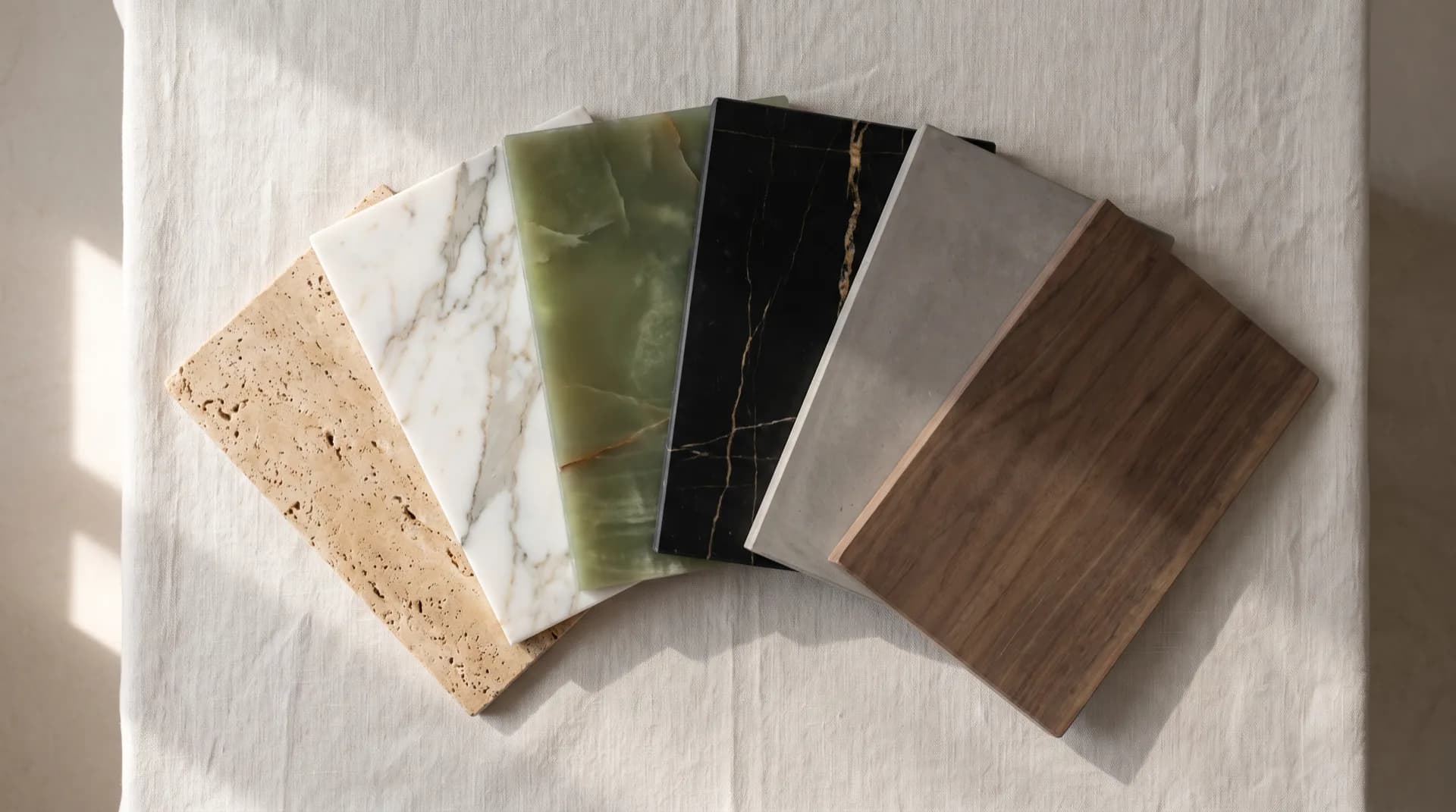
Limestone, travertine and marble floors give a dining room a sense of permanence that manufactured surfaces work hard to imitate. In the right architectural setting they are unmatched. They are also porous, which means sealing on installation and resealing periodically, and wine or olive oil left on an unsealed floor can leave a mark you cannot scrub out.
Carpet
Carpet is the outlier. It solves the acoustic problem better than anything else and makes a formal dining room feel considerably more comfortable, and in a room used for hosting rather than daily meals it is a reasonable choice. In everyday use it struggles: chair legs catch on the pile, crumbs work into it, and spills need immediate attention. A hard floor with a large rug over it gives you most of the acoustic benefit and none of the maintenance problem.
Should the Floor Match the Table?
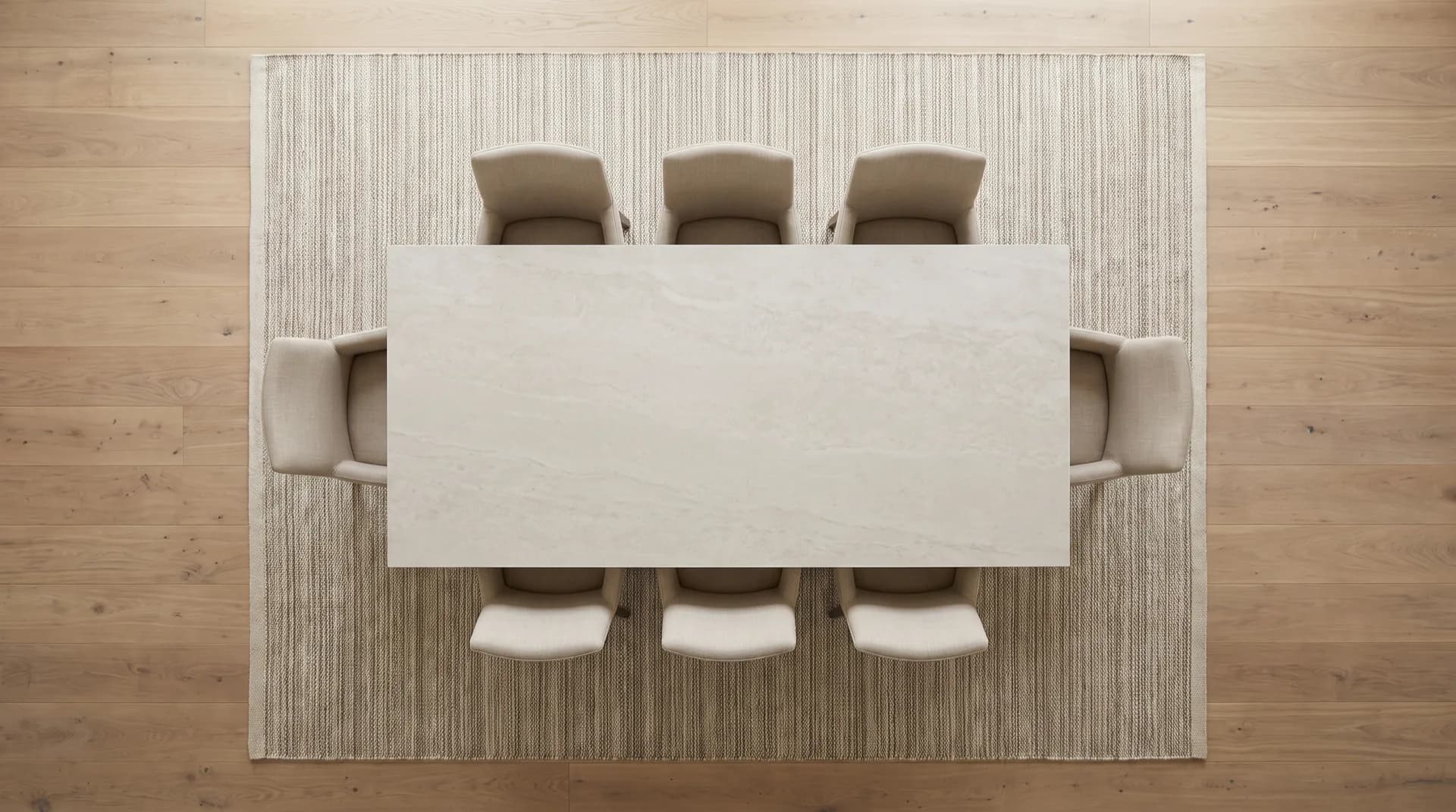
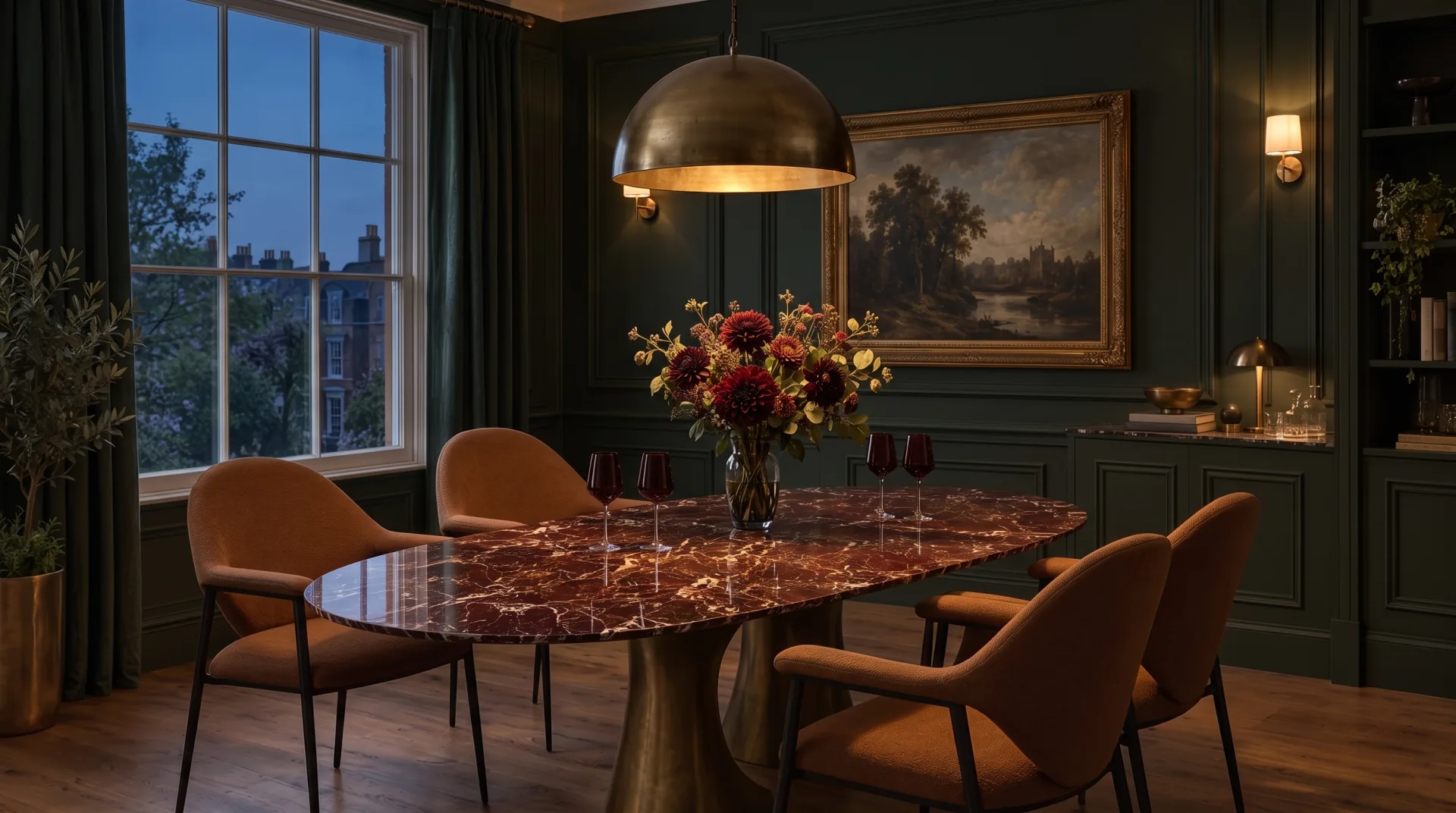
The short answer is no. Matching the table to the floor exactly tends to flatten a room, because the two largest horizontal surfaces merge into one and the table loses its presence. Designers generally work the other way, setting a deliberate difference in tone or in temperature so each surface reads clearly.
- Dark floorsWalnut, dark parquet or charcoal tile carry a lighter top well. A travertine or pale marble character lifts the room and keeps the table legible against the floor.
- Light floorsPale oak, limestone and light porcelain give a darker or more heavily veined top something to sit against, which is where a dramatic marble character earns its place.
- Similar tonesIf floor and top are close in value, separate them another way: a contrasting base, a rug underneath, or a polished top against a matte floor.
- UndertoneMatch warm to warm and cool to cool. A cool grey porcelain top over a warm honey oak floor is the pairing that most often looks accidental.
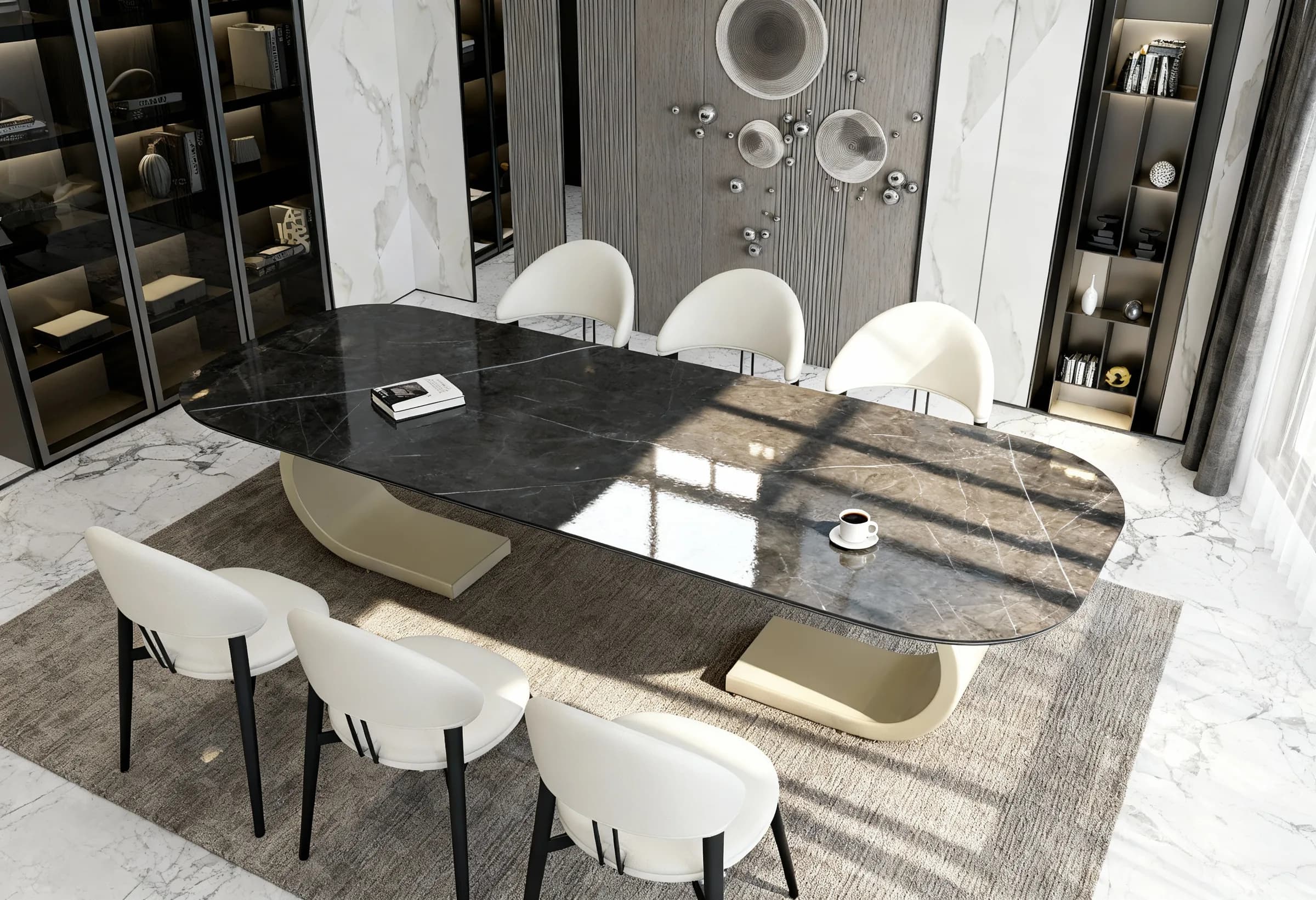
Surface character is the lever that does most of the work here, and it is worth reading the materials and finishes guide alongside this one before settling on a top.
Underfloor Heating and What It Changes
Underfloor heating is close to standard in new build and renovation work, and it narrows the flooring field. Porcelain and stone are the strongest performers, conducting heat efficiently and staying stable at temperature. Engineered wood works when the boards are rated for it and the floor temperature is kept within the manufacturer's limit, usually around 27°C at the surface. LVT is generally compatible, again within a stated limit.
Two knock-on effects matter for the table itself. Thick rugs insulate, so a large dining rug over a heated floor reduces output in exactly the area you want warm. And adhesive furniture pads fail faster on heated floors, because the glue softens and creeps.
Final Thoughts
The best dining room floor is the one matched to how the room is actually used. Porcelain for open plan and underfloor heating, engineered wood for a dedicated dining room with a warmer feel, LVT where daily family use dominates, stone where the architecture supports it, and carpet only where the room is used for hosting.
Whichever it is, keep floor and table tone deliberately apart, and check the point-load rating before putting a heavy stone top on a softer floor. If the table is still to be decided, design it around the room or talk to us about your space.
Frequently asked questions
Last updated 10 September 2026